

Why do data centres need cooling?
Servers, storage systems and network equipment release heat as they operate. If heat builds up faster than it can be removed, equipment temperatures rise and reliable operation can be affected.
Cooling demand depends on the IT equipment, its workload and how densely it is installed. A rack supporting high-performance computing may require a different approach from a rack with a lower heat load.
The aim is to provide suitable conditions at the equipment, rather than simply making the whole room as cold as possible.
How does air cooling remove heat?
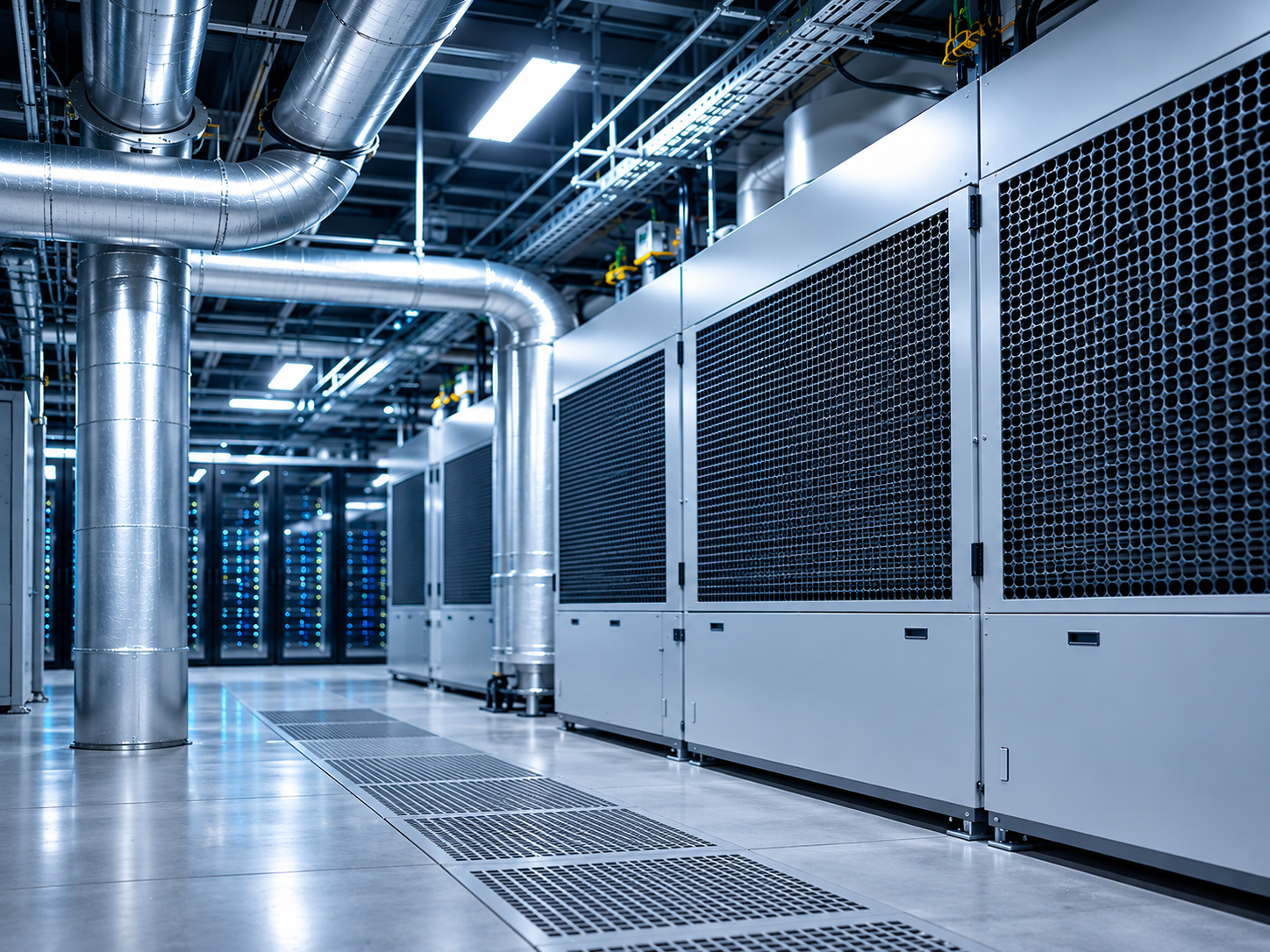
In a typical air-cooled arrangement, server fans draw cooler air through the front of the equipment. The air absorbs heat as it passes over internal components and leaves at the rear at a higher temperature.
The cooling system then collects this warm air, removes heat from it and supplies cooled air back towards the equipment.
The process involves:
-
Delivering cooled air. Air reaches the server inlets through a planned distribution route.
-
Collecting heat. Air warms as it passes through the IT equipment.
-
Returning warm air. The heated air travels back towards the cooling equipment.
-
Transferring heat away. A cooling coil removes heat before the air circulates again.
Depending on the design, air may be supplied through a raised floor, overhead or from equipment close to the racks.
What are hot aisles and cold aisles?
Rack layout helps control where cooled air goes and where warm air returns. In a common arrangement, rack fronts face each other across a cold aisle, while rack rears face each other across a hot aisle.
Doors, roofs or partitions can enclose an aisle to reduce mixing between supply and exhaust air. This is known as containment.
Effective airflow management helps limit:
-
Recirculation. Warm exhaust air returns to server inlets.
-
Bypass air. Cooled air returns to the cooling unit without passing through the equipment.
-
Hot spots. Particular racks receive insufficient cooling despite available capacity elsewhere.
Adding cooling capacity alone may not resolve poor air distribution.
What equipment cools the air:
Two terms commonly used are CRAC and CRAH:
-
CRAC means Computer Room Air Conditioner. These units use a refrigeration system to remove heat from the air.
-
CRAH means Computer Room Air Handler. These units pass air over a chilled-water coil, transferring heat into the water circuit.
Larger air-handling systems and fan wall arrangements are also used. The selection depends on the facility’s layout, load and cooling infrastructure.
Where does the heat go next?
Cooling a server room transfers heat into another medium; the heat still needs a route out of the building.
For example, in an air-cooled chiller arrangement:
-
Room air transfers heat into chilled water. This happens at the air-handling unit’s cooling coil.
-
The warmer water returns to the chiller. Heat passes into the chiller’s refrigeration circuit.
-
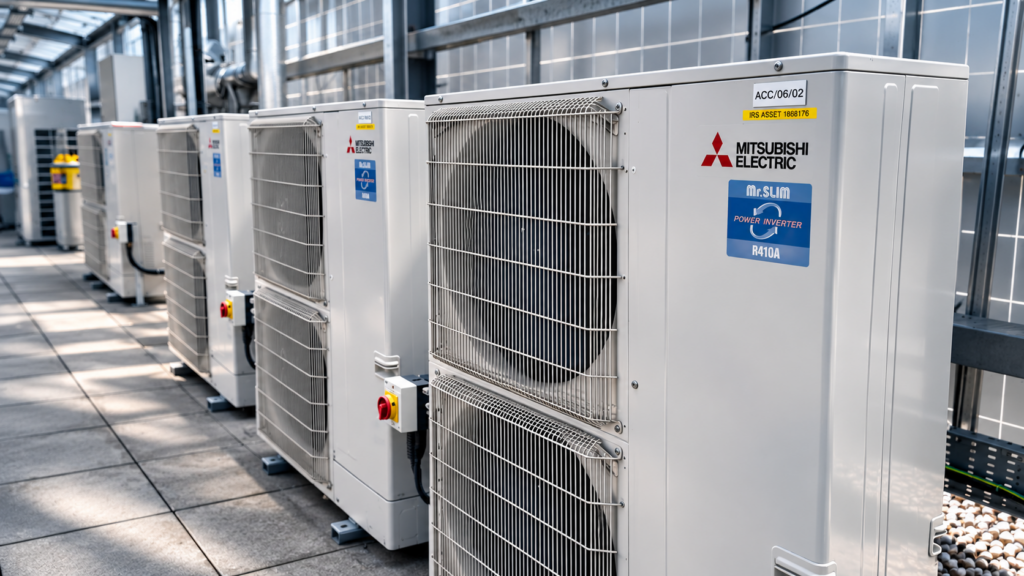
The chiller rejects heat outdoors. Its condenser transfers that heat to the outside air.
-
Cooled water returns to the room equipment. The cycle continues while cooling is required.
Other designs use different heat rejection equipment, such as cooling towers. The important point is that the indoor cooling equipment and outdoor plant form a connected system.
What is free cooling?
When outdoor conditions are suitable, a cooling system can use them to reduce its reliance on compressor-based refrigeration. This is commonly called free cooling or economiser cooling.
In a water-side arrangement, a heat exchanger can transfer heat from the cooling water to a colder outdoor-side circuit, reducing or bypassing chiller operation. Air-side approaches use outdoor air directly or through a heat exchanger.
The opportunity depends on the climate, equipment design and required operating temperatures. “Free” does not mean zero energy consumption: fans, pumps and controls may still need power.
How does liquid cooling work
Liquid cooling collects heat using a circulating fluid. It can be particularly useful where high heat loads make air cooling alone difficult to deliver effectively.
Different approaches include:
-
Direct-to-chip cooling. Coolant passes through cold plates attached to selected components, such as processors, absorbing heat close to its source.
-
Rear-door heat exchangers. A liquid-cooled heat exchanger at the rear of a rack removes heat from server exhaust air.
-
Immersion cooling. Suitable IT equipment is submerged in a specially selected electrically insulating fluid.
Many installations combine air and liquid cooling because some equipment or components still require airflow. Liquid cooling changes how heat is collected; the heat must still be transferred away from the facility.
What role does a CDU play
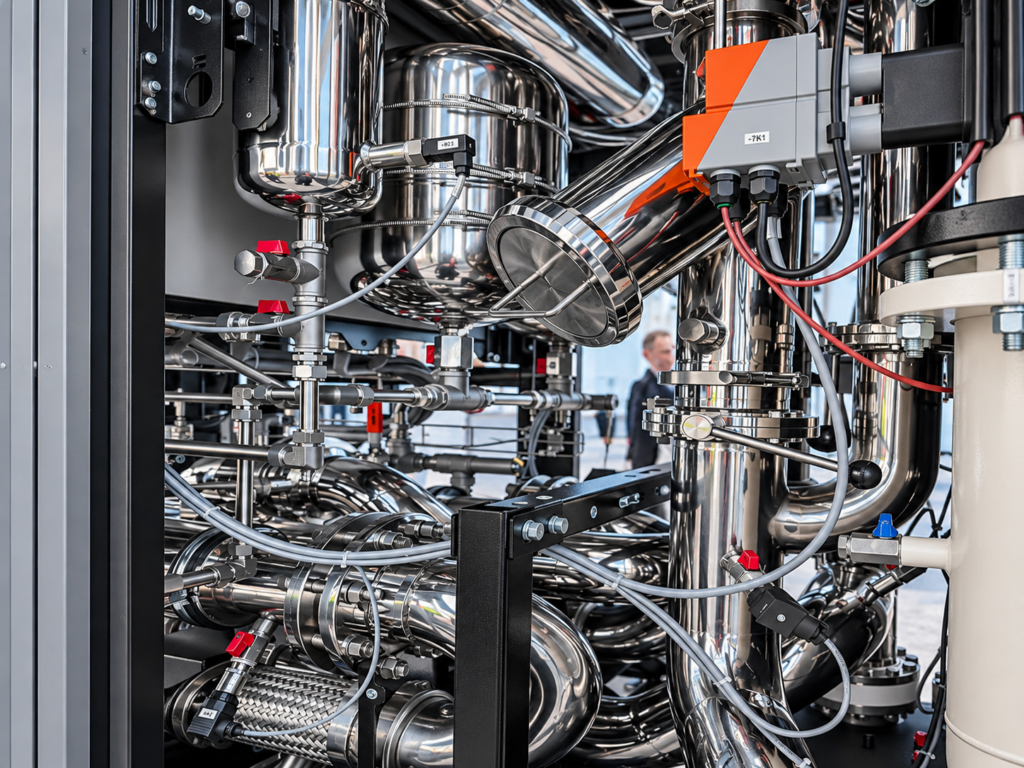
A Coolant Distribution Unit, or CDU, manages coolant circulation and operating conditions in a liquid cooling system.
In a typical liquid-to-liquid CDU, a heat exchanger transfers heat from the IT coolant into the facility water circuit while keeping the two fluids separate. Pumps, sensors and controls help manage flow, pressure and temperature.
This allows the coolant serving sensitive IT components to have its own controlled conditions. The CDU works as part of the wider cooling infrastructure, alongside the equipment that ultimately rejects the heat.
For a closer look at this equipment, read our article, What Is a Coolant Distribution Unit (CDU)?
Why do monitoring and resilience matter
Conditions at the equipment matter more than a single room temperature reading. Temperature, humidity and cooling flow must suit the installed equipment and its operating requirements.
Monitoring helps operators identify changes, while redundancy can provide additional capacity or alternative cooling paths during maintenance or faults. Its effectiveness depends on the complete design, controls and power arrangements.
Why are commissioning and maintenance important
Installed equipment needs to operate correctly both individually and as part of the complete system. Commissioning checks performance against the agreed design and verifies how equipment responds under planned operating and fault conditions.
Depending on the project, checks may include:
-
Air and water flow. Verifying delivery against the design requirements.
-
Temperature control. Checking sensors, settings and system responses.
-
Alarms and changeover. Testing agreed responses to equipment faults.
-
Integrated operation. Confirming that cooling equipment and controls work together.
-
Handover information. Recording results, operating settings and procedures.
Ongoing maintenance then helps preserve performance through inspection, cleaning and servicing appropriate to the equipment and site.
Data centre cooling support from Chillax Engineering
Effective data centre cooling depends on the whole system: how heat is collected, how it is transported and how it is rejected. Airflow, controls, cooling plant and operating procedures all contribute to reliable performance.
Chillax Engineering supports data centre cooling and specialised commissioning projects. Call us on 01933 313350 or send us a message. You can also read our air conditioning inspection FAQs.